
The Poppy Grace Lifeblood Team
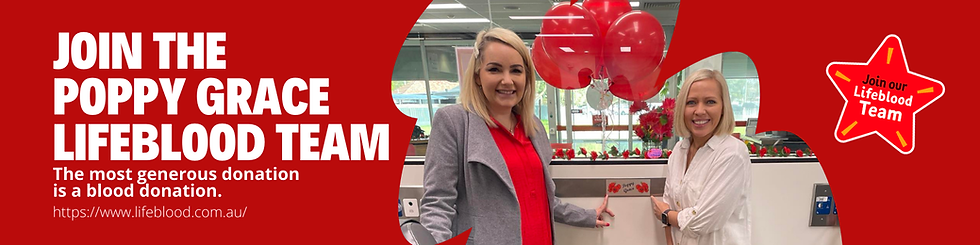
A side effect of cancer treatment that many people do not know about is the need for blood transfusions. This is particularly relevant to leukemia patients as leukemia is a cancer of the blood. Leukemia is characterised by the rapid production of abnormal white blood cells, which are crucial to the body's immune system. These abnormal cells can crowd out normal blood cells, leading to issues like anaemia, infection, bleeding disorders and death. Chemotherapy also negatively impacts blood results as well causing blood counts to be drastically impaired.
When Poppy Grace was diagnosed with High-Risk Infantile Acute Lymphoblastic Leukemia in August 2021, we got a crash course on how to read her blood results, leukemia protocols, chemotherapy and immunotherapy side effects and medical research papers. The first thing we had to learn was how the leukemia was impacting her blood. Blood has three main components, red blood cells, white blood cells and platelets, and these components are suspended in a liquid called plasma, which makes up about 55% of total blood volume. When Poppy was diagnosed, her white blood cell count was 473,000, and a normal white cell count for an infant is meant to be under 18,000. Her haemoglobin (haemoglobin is a protein found within red blood cells) was just 23. A normal range of haemoglobin should be above 95.
The first priority of the ICU team was to get the leukemia under control, but the risk of killing off the leukemia too fast is tumour lysis. Tumour lysis is a potentially life-threatening condition that can occur during the treatment of cancers that grow very quickly, such as certain leukemias. It happens when cancer cells die off very rapidly, leading to the release of their contents into the bloodstream. Poppy was taken for emergency surgery to have a temporary IV line inserted into her neck so she could receive much-needed blood products and medications to start treating the leukemia. We began to see just how important blood donations were. Previous to this, we had both been blood donors, but we had no idea that they were a literal lifeline to infants and children undergoing cancer treatment.
This was all occurring right in the middle of Covid lockdowns. This complicated Poppy's treatment significantly. It meant that only one parent could be present for a great deal of Poppy's treatment. As a very close family, we found this extraordinarily difficult. It also meant that Poppy could not have any visitors at the hospital. We had friends and family who wanted to help Poppy but physically weren’t allowed to visit us. And so... the Poppy Grace Lifeblood Team was born. It was a way that people who cared could show up, and we got we found immense joy in watching the donation counts for whole blood, platelets, and plasma rise.

Once chemotherapy began for Poppy, we saw the absolute turmoil it created for her blood counts. Chemotherapy can significantly impact blood counts because it targets rapidly dividing cells, a common characteristic of cancer cells. However, this treatment does not exclusively affect cancer cells, it also impacts other rapidly dividing cells in the body, including those in the bone marrow that produce blood cells. Here is how each component is impacted:
White Blood Cells (WBCs): These cells are part of the immune system and help fight infection. Chemotherapy can lead to a decrease in white blood cells, a condition known as neutropenia, which increases the risk of infections. You often hear cancer patients asking about their neutrophils. If the neutrophils are too low, they are at great risk of catching viral, bacterial and fungal infections, which can be fatal for immunocompromised cancer patients.
Red Blood Cells (RBCs): These cells carry oxygen throughout the body. Chemotherapy can cause anaemia by reducing red blood cell counts, leading to symptoms such as fatigue, weakness, and shortness of breath. When Poppy's RBC's were low she would become very lethargic, pale, and her heart rate would increase significantly. Teenage patients explained to us that when they received a whole blood transfusion they would feel as if they'd had a Red Bull, their energy would increase dramatically.
Platelets: These cells help with blood clotting. A reduction in platelet count (thrombocytopenia) due to chemotherapy can increase the risk of bruising and bleeding. It was always very scary when Poppy's platelets were low as the risk of internal bleeding heightened. Blood supplies began to run low in the hospitals during Covid and the threshold for a blood transfusion became lower, for example, Poppy used to get a platelet transfusion when her platelets were below 20. When there were platelet shortages, she would have to wait until her platelets dipped below 5. When platelets are low, the kids bruise more easily. Poppy would get petechiae (little bruises on her face) and even had a bruise on her tongue once.
We asked our community to get out and donate blood, plasma and platelets for Poppy Grace and for the children suffering on the ward. We never ever expected the loving outpouring of support we received. The Poppy Grace Lifeblood team has continued to give selflessly ever since. Poppy received 113 blood transfusions during her cancer treatment, and if we could hug every single donor, we would. A blood donation is so much more than just giving up your time, each donation saves three lives! As you can see in the table below the Poppy Grace Lifeblood Team have now saved 8604 lives! What an incredible gift!

We love blood donors so very much, and especially ones who donate in our Poppy Grace's honour. She may not be here anymore, but her legacy is thriving because of the collective actions of a wonderful group of people who were inspired by her fight. We thank you all for keeping our beautiful girl alive and present in your hearts.
With wholehearted gratitude,
Carly and Tresne Middleton

Comments